
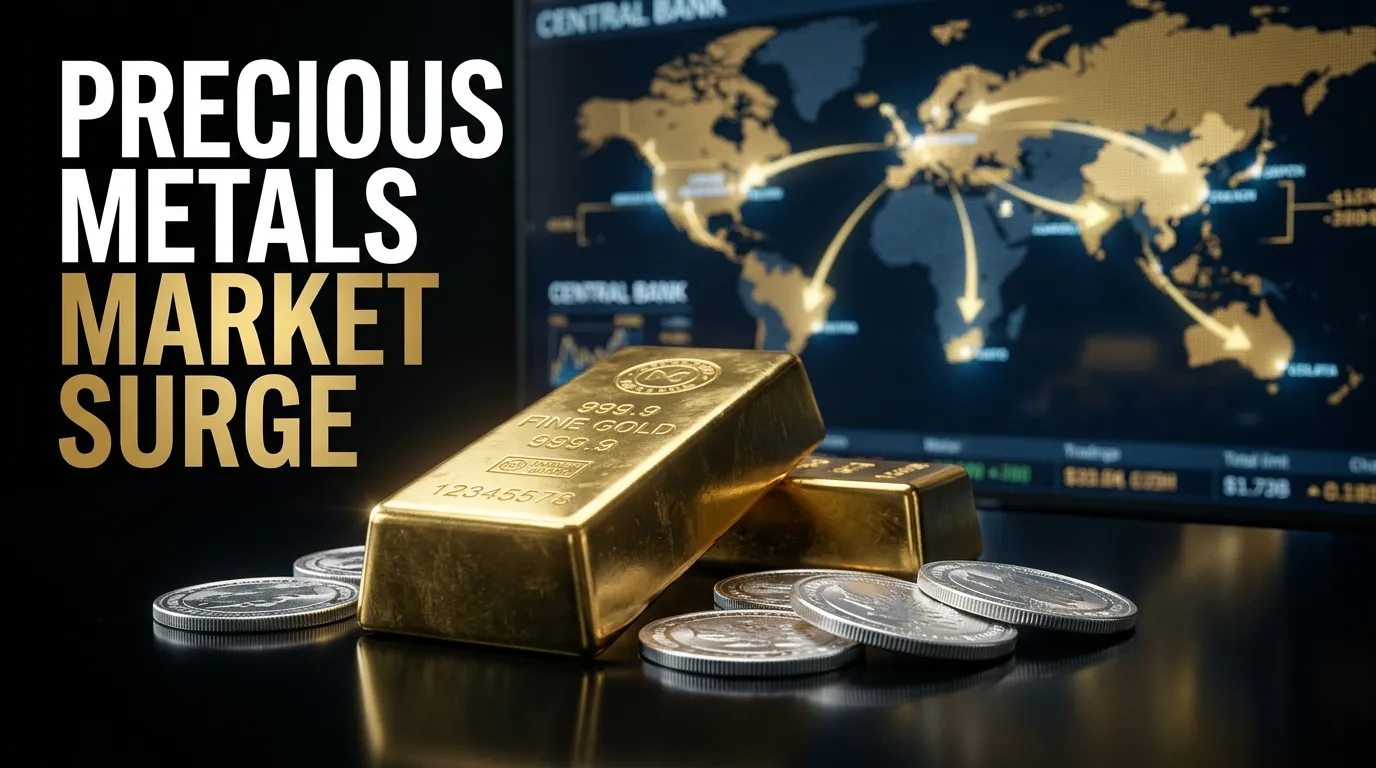
Precious metals are back in the financial spotlight. Gold and silver prices are moving as major global banks adjust their reserves. If you follow commodities, you know that central banks hold huge amounts of gold. Right now, their buying habits are changing the entire market.
At Finance Daily, we look at how these big moves affect your everyday choices. You might also find it interesting to see how other hard assets change over time, much like how Bitcoin miners face pressure as network hashrate hits new record levels during shifting economic cycles.
Why Central Banks Are Buying Gold
Central banks want safety. When the global economy feels shaky, these large institutions buy gold to protect their wealth. Over the past few months, banks in several developing nations increased their gold purchases. They want less reliance on standard foreign currencies.
This steady demand puts a floor under gold prices. Even when other markets drop, gold tends to hold its ground. Private investors watch these central bank actions very closely. When big buyers step into the market, retail buyers often follow.
Industrial Demand For Silver
Silver is different from gold because factories use a lot of it. Solar panel makers and electronics manufacturers need silver every single day. Recent manufacturing reports show that industrial demand remains strong.
This creates a unique push and pull for silver. On one side, investors treat silver like a safe place to park money. On the other side, factories need the metal to build green energy products. When these two forces meet, price swings can happen fast.
What This Means For Your Portfolio
Many everyday investors use precious metals to balance their risk. Stocks and bonds can drop quickly when bad news hits. Gold and silver often act as insurance policies for your savings.
You do not need to buy bars of gold to take part. Some people buy shares in mining companies. Others purchase physical coins. No matter the method, you should always think about your long-term goals before you buy.
Risks And Market Volatility
Precious metals are not risk-free. Prices go up and down every single day. If interest rates stay high, holding metals can become expensive compared to earning cash interest.
You must also watch out for storage costs if you buy physical bullion. Keeping gold at home or in a bank vault costs money. Always weigh these extra costs against your expected gains.
What To Watch Next
Keep an eye on the upcoming economic reports from major global central banks. If interest rates change, gold and silver prices will likely react right away. Industrial production numbers will also tell us if factories are still buying silver at high rates.
Sources and References
- Reuters: World Gold Council reports on central bank reserve trends.
- Bloomberg: Industrial silver demand data from manufacturing sectors.
- Financial Times: Coverage of global monetary policy and commodity price movements.
Editorial Transparency: This article was initially drafted with the assistance of AI and reviewed by a human editor for factual accuracy, source quality, clarity, and editorial standards before publication. Financial information may change as new developments emerge. Readers are encouraged to consult the original sources linked in this article.
Disclaimer: This article is provided for general informational and educational purposes only. It does not constitute financial, investment, trading, tax, or legal advice. Financial markets, stocks, cryptocurrencies, and other financial assets involve risk, and prices may fluctuate significantly. No outcome or investment return is guaranteed. Information may change after publication, and although reasonable efforts are made to use reliable sources, errors or omissions may occur. Readers should verify important information through the original sources and conduct their own research before making financial decisions. Consider consulting a qualified financial professional where appropriate. FinanceDaily.site is not responsible for financial decisions made solely on the basis of this article.


One thought on “Precious Metals Markets React To New Central Bank Buying Trends”