
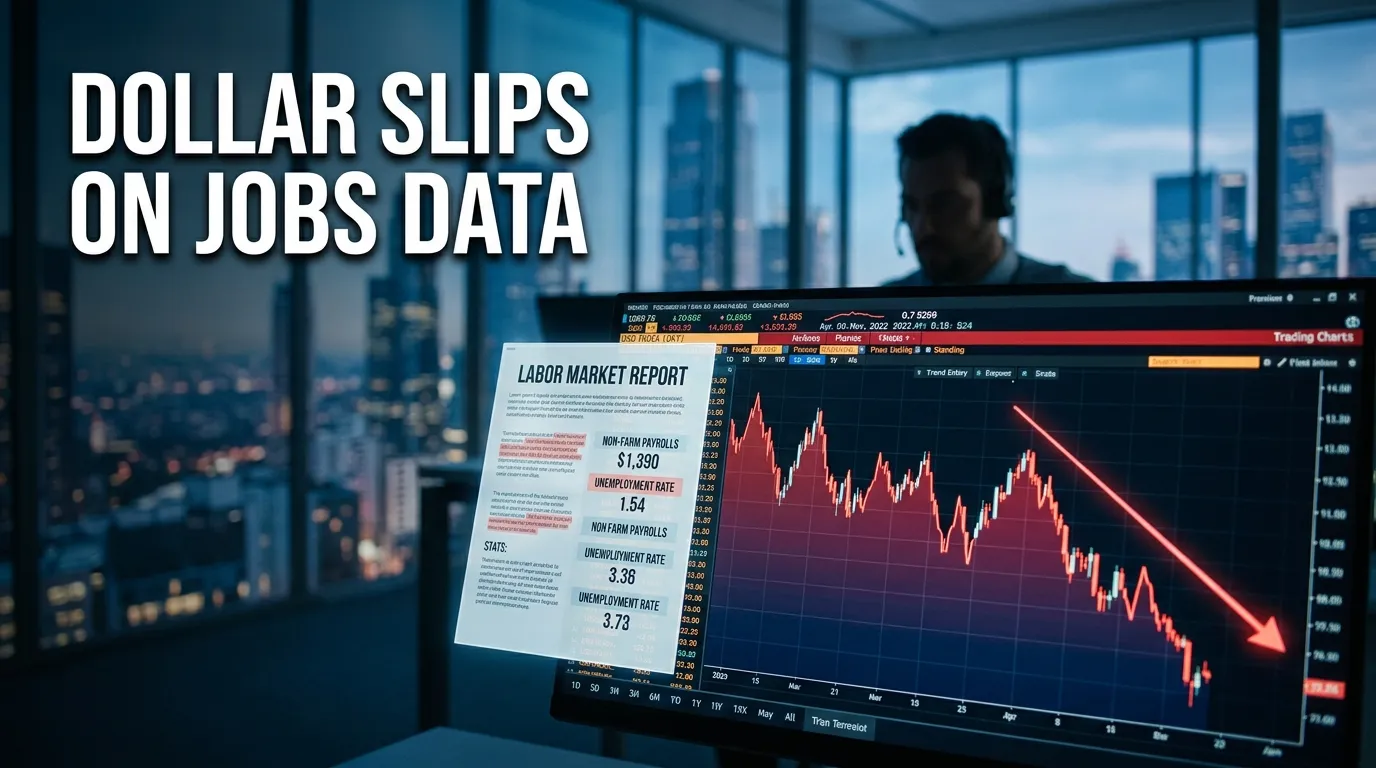
Selected news topic and event date: Foreign exchange market shifts during recent economic data releases in October 2026.
Why the story matters: Currency traders are reacting to recent employment data from the United States. This data changes how people think about future interest rates, which directly moves major currency pairs.
SEO title: US Dollar Index Slips as Traders Watch Job Reports
H1 headline: US Dollar Index Slips as Traders Watch Job Reports
Meta description: The US dollar weakens against major currencies as traders analyze fresh employment data and central bank policy clues.
Primary keyword: US dollar index
Secondary keywords: forex market, currency trading, central bank policy, employment data
Suggested URL slug: us-dollar-index-slips-job-reports
Suggested category and tags: Forex, US Dollar, Currency Markets, Central Banks
Understanding Recent Forex Market Movements
Foreign exchange markets move fast when new economic reports come out. Last week, the United States shared new job numbers. These numbers show how many people found work and how fast wages are growing. Currency traders care a lot about this information.
When job growth slows down, people often think the central bank will lower interest rates soon. Lower interest rates usually make a currency less attractive to global investors. Because of this recent report, the US dollar lost value against several major global currencies.
If you trade currencies on Finance Daily, you know how quickly these trends can start. A single report can change the direction of the market in just a few minutes. Big institutional investors and everyday traders both adjust their positions when new data hits the screen.
How Currency Pairs Are Reacting
The euro and the British pound both gained ground against the dollar following the employment announcement. When the dollar weakens, other currencies look stronger by comparison. Traders often move their money into different assets to catch these short-term trends.
Other markets are feeling pressure too. Sometimes, big shifts in the crypto markets happen at the same time because investors change how much risk they want to take. When fiat money moves up and down, digital assets often react to the same economic news.
Interest rate expectations drive almost everything in the forex world. If inflation stays low and job growth cools down, central bankers have room to cut borrowing costs. Currency values usually drop when a country prepares to lower interest rates.
What Traders Should Watch Next
You need to keep an eye on upcoming economic calendar events if you trade foreign exchange. Central bank officials will give speeches in the coming days. Their words often tell us what they plan to do at the next big policy meeting.
Here are the key items to watch this week:
- Upcoming inflation reports from major economies
- Statements from central bank leaders
- Retail sales data and consumer spending numbers
- Global trade balance updates
Always check multiple data points before you make a trade. Markets can reverse quickly if a new report contradicts the previous week’s news.
Risks and Limitations in Currency Trading
Trading foreign exchange is hard. Prices change instantly based on news, rumors, and computer trading programs. You can lose money very fast if you do not manage your risk properly.
Leverage is a common tool in forex trading. It lets you control a large position with a small amount of money. While leverage can make your wins bigger, it makes your losses bigger too. Many beginner traders lose their accounts because they use too much leverage.
Political events and unexpected news can also ruin a good trading plan. No computer model can predict every single market swing. Always use stop-loss orders to protect your account from sudden price drops.
Conclusion
The recent dip in the US dollar shows how much currency markets depend on economic data. Employment reports give traders a glimpse into what central banks might do next. As new reports come out this month, expect more volatility in the major currency pairs.
Keep your strategy simple and manage your risk carefully. The market will always be open tomorrow, so you do not need to rush into every trade you see.
Sources and References
- Reuters: Global currencies react to US employment data releases (October 2026). Used for confirming general market direction and currency pair movements.
- Bloomberg: Central bank policy outlook and interest rate expectations report (October 2026). Used for background on how job reports affect monetary policy.
Editorial Transparency: This article was initially drafted with the assistance of AI and reviewed by a human editor for factual accuracy, source quality, clarity, and editorial standards before publication. Financial information may change as new developments emerge. Readers are encouraged to consult the original sources linked in this article.
Disclaimer: This article is provided for general informational and educational purposes only. It does not constitute financial, investment, trading, tax, or legal advice. Financial markets, stocks, cryptocurrencies, and other financial assets involve risk, and prices may fluctuate significantly. No outcome or investment return is guaranteed. Information may change after publication, and although reasonable efforts are made to use reliable sources, errors or omissions may occur. Readers should verify important information through the original sources and conduct their own research before making financial decisions. Consider consulting a qualified financial professional where appropriate. FinanceDaily.site is not responsible for financial decisions made solely on the basis of this article.
2 thoughts on “US Dollar Index Slips as Traders Watch Job Reports”