
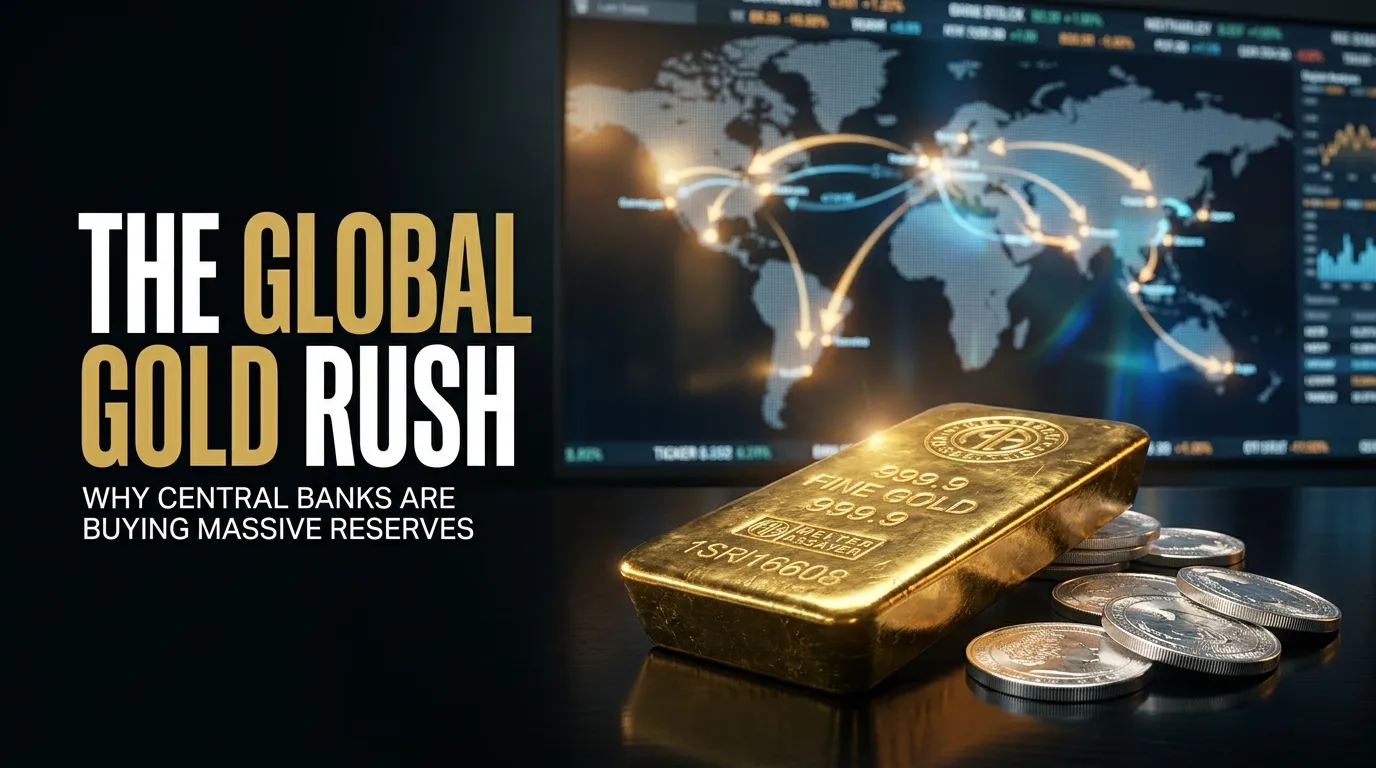
Gold prices are hitting major milestones lately. If you look at what global central banks are doing, you can see a clear pattern. Governments around the planet are buying physical gold in record amounts. This trend is changing how regular investors look at safe-haven assets.
When institutions that hold trillions of dollars start hoarding a precious metal, people tend to pay attention. You might wonder why central banks prefer gold over foreign currencies right now. Let us break down what is happening in the bullion market and why it matters to your portfolio.
The Shift in Global Reserves
For decades, many countries kept most of their wealth in foreign cash, especially US dollars. They used these funds to stabilize their own local money and manage trade debts. Things changed after major geopolitical events led to sudden economic sanctions on certain nations.
When some countries saw their foreign bank accounts frozen, their leaders realized a hard truth. Digital money and foreign bonds can be locked away with a keystroke. Physical gold sitting in a local vault cannot be frozen by a foreign government.
Because of this risk, central banks in Asia, the Middle East, and Eastern Europe started moving away from standard paper assets. They want hard assets they can control completely. This massive buying spree creates a strong floor for gold prices across the globe.
Inflation Pressures and Currency Debasement
Governments spent huge amounts of money over the last few years to fight economic slowdowns. That spending created heavy inflation pressures that still affect everyday shoppers. When fiat money loses purchasing power, people look for ways to protect their hard-earned savings.
Central bankers face the same problem on a massive scale. They know that printing more paper money reduces the long-term value of those reserves. By stacking gold, they protect their national wealth against currency debasement.
This institutional demand creates a very different market dynamic than we saw ten years ago. Back then, retail investors drove most of the price swings. Now, you have massive government buyers who do not care about short-term price drops. They buy for the long haul.
How This Affects the Broader Economy
When the price of gold moves up, other financial sectors react quickly. Currency traders often adjust their positions based on how safe a nation feels. If you trade currencies, you can learn more about these shifts by checking how Forex Markets React as Central Bank Policies Shift.
Higher gold prices also signal a lack of trust in traditional banking systems. When people worry about bank stability or government debt levels, they buy precious metals. Mining stocks often rally right alongside the physical metal because their profit margins grow.
At Finance Daily, we track these trends closely to help you understand big economic moves. You do not need to be a Wall Street expert to see that trust in paper money is shifting toward tangible assets.
What to Watch Next
If you want to keep track of this trend, watch upcoming reports from the World Gold Council. They publish quarterly data showing exactly which central banks are buying or selling. Also, keep an eye on interest rate decisions from major central banks.
When interest rates stay high, holding non-yielding assets like gold usually becomes harder for regular investors. Yet, central banks keep buying anyway. That tells you they care more about safety and long-term risk than short-term interest payments.
Risks and Limitations
Investing in gold is not a magic trick that guarantees instant profits. Like any asset, gold prices go up and down based on market mood. If inflation cools down faster than expected, gold prices might face a temporary pullback.
Physical gold also does not pay dividends or interest. You only make money when the selling price goes higher than your purchase price. Make sure you understand these limits before putting all your savings into precious metals.
Final Thoughts
Central banks buying gold changes the rules of the game. It shows that major financial leaders want maximum security in an unpredictable world. While you should never put all your eggs in one basket, understanding this trend helps you make smarter choices with your money.
Editorial Transparency: This article was initially drafted with the assistance of AI and reviewed by a human editor for factual accuracy, source quality, clarity, and editorial standards before publication. Financial information may change as new developments emerge. Readers are encouraged to consult the original sources linked in this article.
Disclaimer: This article is provided for general informational and educational purposes only. It does not constitute financial, investment, trading, tax, or legal advice. Financial markets, stocks, cryptocurrencies, and other financial assets involve risk, and prices may fluctuate significantly. No outcome or investment return is guaranteed. Information may change after publication, and although reasonable efforts are made to use reliable sources, errors or omissions may occur. Readers should verify important information through the original sources and conduct their own research before making financial decisions. Consider consulting a qualified financial professional where appropriate. FinanceDaily.site is not responsible for financial decisions made solely on the basis of this article.



4 thoughts on “Why Central Banks Are Buying Massive Amounts of Gold Right Now”